
BenQ MA270UP vs BenQ EX270M Comparison
BenQ MA270UP vs BenQ EX270M compares two monitors with different strengths for picture quality, motion, and everyday use. BenQ MA270UP is specified with 27-inch / IPS / 4K / W-LED, while BenQ EX270M uses 27-inch / IPS / Full HD / W-LED. The listed refresh rate is 60 Hz on BenQ MA270UP and 120 Hz on BenQ EX270M. BenQ MA270UP lists 95% DCI-P3 coverage; an equivalent published gamut figure is not available for BenQ EX270M. BenQ MA270UP’s clearest advantages are higher native resolution and USB-C video connectivity. BenQ EX270M’s clearest advantages are higher 120Hz-class refresh rate and faster listed pixel response. The better choice depends on which of those differences matters most in your setup.
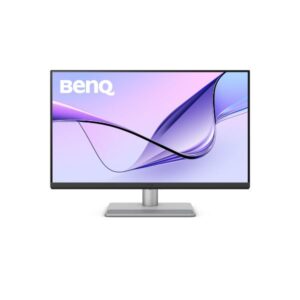
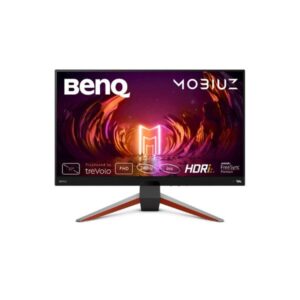
| Specification | ||
|---|---|---|
| Overview | ||
| Rating | 7.6 / 10 | 6.6 / 10 |
| Brand | Benq | Benq |
| Category | Monitor | Monitor |
| Model Information | ||
| Brand | Ben Q | Ben Q |
| Series | Design Vue | MOBIUZ |
| Model | MA270UP | EX270M |
| Model Alias | -- | MOBIUZ EX270M |
| Full Product Name | Ben Q MA270UP | Ben Q MOBIUZ EX270M |
| Model Year | 2025 | 2022 |
| Monitor Type | Professional / Creator Monitor | Gaming Monitor |
| Monitor Category | Mac-Oriented Productivity Monitor | Gaming Monitor |
| Market Position | Mac-Oriented Professional | Mainstream Immersive Gaming |
| Primary Use | Mac-Based Creative Work & Productivity | Immersive & Everyday Gaming |
| Region / Variant | Not specified | Not specified |
| Launch Status | Model year 2025 | Model year 2022 |
| Available Colors | Silver | Dark Grey |
| Warranty | 3 years (36 months) | 3 years (36 months) |
| Burn-In Warranty | Not applicable (non-OLED panel) | Not applicable (non-OLED panel) |
| Display & Panel | ||
| Screen Size | 27-inch | 27-inch |
| Exact Diagonal | 684 mm / 68.4 cm / 26.9291 in / 2.2441 ft | 685.655 mm / 68.5655 cm / 26.9943 in / 2.2495 ft |
| Screen Format | 16:9 | 16:9 |
| Aspect Ratio | 16:9 | 16:9 |
| Active Display Width | 596.736 mm / 59.6736 cm / 23.4935 in / 1.9578 ft | 597.6 mm / 59.76 cm / 23.5276 in / 1.9606 ft |
| Active Display Height | 335.664 mm / 33.5664 cm / 13.2151 in / 1.1013 ft | 336.15 mm / 33.615 cm / 13.2343 in / 1.1029 ft |
| Display Area | 88.75 % (percent) | 86.21 % (percent) |
| Panel Type? | IPS | IPS |
| Panel Technology | Nano Gloss Panel | IPS |
| Backlight Type? | W-LED | W-LED |
| 3D Support | No | No |
| Screen Coating | Glossy / Nano Gloss Panel | Anti-glare / Matte (3H) |
| Resolution & Pixel Details | ||
| Native Resolution | 3840 × 2160 | 1920 × 1080 |
| Pixel Density | 163 PPI | 81 PPI |
| Pixel Pitch | 0.155 mm (millimeters) | 0.311 mm (millimeters) |
| Picture Quality & Color | ||
| Panel Bit Depth | 10 bits (8 bits + FRC) (FRC: Yes) | 8 bits |
| FRC | Yes | -- |
| Display Colors | 1073741824 colors | 16777216 colors |
| Typical Brightness | 400 cd/m² | 400 cd/m² |
| Peak Brightness | 400 cd/m² | -- |
| Static Contrast Ratio | 1200 : 1 | 1000 : 1 |
| Horizontal Viewing Angle | 178 ° | 178 ° |
| Vertical Viewing Angle | 178 ° | 178 ° |
| HDR Support? | Display / HDR 400 | HDR10 |
| HDR10? | -- | Yes |
| Dynamic Tone Mapping | -- | Yes |
| sRGB Coverage | 99% | 99% |
| DCI-P3 Coverage | 95% | -- |
| Refresh Rate, Response & Gaming | ||
| Native Refresh Rate | 60 Hz | 120 Hz |
| Refresh Rate Range | 60 Hz (hertz) | 48 Hz - 240 Hz |
| Minimum Response Time | 5 ms / 0.0050 s | -- |
| MPRT Response Time | -- | 1 ms (MPRT) |
| AMD FreeSync? | -- | Premium |
| Motion Blur Reduction | Yes | Supported |
| Black Equalizer | -- | Yes |
| Ports & Connectivity | ||
| HDMI Ports | 2×HDMI 2.0 |
2×HDMI 2.0 |
| HDMI Version | HDMI 2.0 | HDMI 2.0 |
| DisplayPort Input | -- | 1× DisplayPort 1.4 |
| DisplayPort Version | -- | DisplayPort 1.4 |
| USB-C Video Input | 1× USB-C | -- |
| DisplayPort Alt Mode | Yes | -- |
| HDCP Support | Yes | Yes |
| USB-C Data Speed | 5 Gbps (USB 3.2 Gen 1) | -- |
| USB-C Power Delivery | 90W | -- |
| USB-A Ports | 2 | 2 |
| USB-B Upstream | -- | 1× USB-B |
| Audio Output | 3.5 mm | 3.5 mm |
| Headphone Output | 3.5 mm Audio Out | 3.5 mm Audio Out |
| Audio, Camera, Network & Smart Features | ||
| Built-In Speakers | 2 x 3 W | 2 x 2 W |
| Built-In Subwoofer | -- | 1 x 5 W / True Sound by tre Volo |
| Built-In Camera | No | No |
| Ergonomics & Stand | ||
| VESA Mount | 100 x 100 mm | 100 x 100 mm |
| VESA Size | 100 × 100 mm | 100 × 100 mm |
| Removable Stand | Yes | Yes |
| Height Adjustment | 115 mm | 100 mm |
| Height Range | 115 mm | 100 mm |
| Height Adjustment Range | 115 mm / 11.5 cm / 4.5276 in / 0.3773 ft | 100 mm / 10 cm / 3.937 in / 0.3281 ft |
| Tilt Adjustment | Yes | Yes |
| Forward Tilt | 5 ° | 5 ° |
| Backward Tilt | 20 ° | 15 ° |
| Swivel Adjustment | Yes | Yes |
| Left Swivel | 15 ° | 15 ° |
| Right Swivel | 15 ° | 15 ° |
| Left Pivot | 0 ° | -- |
| Right Pivot | 90 ° | -- |
| Portrait Mode | Yes | No |
| Security Lock | Yes | Yes |
| Anti-Theft Lock | Kensington Lock | Kensington Lock |
| Dimensions, Weight & Design | ||
| Dimensions With Stand | 613.8 mm x 445.1 mm x 220.2 mm (W x H x D) | 614 mm x 425.6 mm x 194 mm (W x H x D) |
| Dimensions Without Stand | 613.8 mm x 367.7 mm x 83.5 mm (W x H x D) | 614 mm x 379.5 mm x 70.5 mm (W x H x D) |
| Weight With Stand | 8.2 kg | 6.4 kg |
| Weight Without Stand | 5.14 kg | 4.25 kg |
| Stand Depth | 220.2 mm / 22.02 cm / 8.6693 in / 0.7224 ft | 194 mm / 19.4 cm / 7.6378 in / 0.6365 ft |
| Power & Operating Conditions | ||
| Power Input | 100–240V | 100–240V |
| 110V Input Range | 100 V - 120 V | 100 V - 120 V |
| 220V Input Range | 220 V - 240 V | 220 V - 240 V |
| AC Frequency | 50/60Hz | 50/60Hz |
| Typical Power Consumption | 40W | 22W |
| Average Power Consumption | 40W | 22W |
| Maximum Power Consumption | 220W | 70W |
| Sleep Consumption | 0.5W | 0.5W |
| Off Consumption | 0.5 W | 0.5 W |
| Eye Care, Protection & Additional Features | ||
| Flicker-Free | Yes | Yes |
| Low Blue Light | Yes | Yes |
| Reader Mode | Yes | Yes |
| Auto Brightness | Yes | Yes |
| Desktop Control Software | Yes | -- |
| Monitor Management Software | Yes | -- |
| Anti-Theft Slot | Yes (Kensington lock slot) | Yes (Kensington lock slot) |
| Additional Monitor Features | AMA (Advanced Motion Accelerator), Auto Pivot, Color Weakness, Display Pilot 2, e PaperFlicker-free technologyLow Blue LightMac Book Control |
AMA (Advanced Motion Accelerator)AMDFreeSync PremiumBlack EqualizerBrightness Intelligence Plus technologyColor VibranceColor Weakness Modee Paper ModeFlicker-free technology, FPS Mode, HDRi, Light TunerLow Blue Light, Motion Blur Reduction; Anti-theft stand lock slot - Kensington |
| Certifications, Standards & Licenses | ||
| Energy Star | ENERGY STAR | -- |
| TÜV Flicker-Free | TÜV Rheinland Flicker-free Certified | TUV Rheinland Flicker-free Certified |
| TÜV Low Blue Light | TÜV Rheinland Low Blue Light Certified | TUV Rheinland Low Blue Light Certified |
| TÜV Eye Comfort | Yes | -- |
| VESA DisplayHDR? | Display / HDR 400 | -- |
| Included Accessories | ||
| HDMI Cable | HDMI cable | HDMI cable |
Methodology: The verdict and comparison notes on this page were written and checked by an editor working from the full specification table below. Conclusions are based on manufacturer-listed specifications only - no benchmark testing, measured brightness or hands-on use is claimed unless stated. Missing values are left blank rather than estimated. Report an error.
Updated: September 2026