
LG 24G411A vs LG 24GS60F Comparison
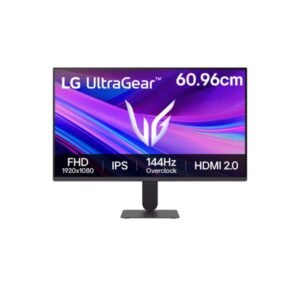
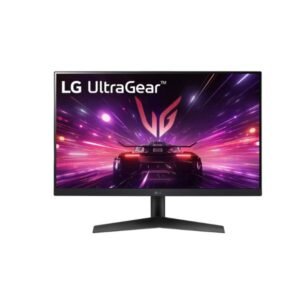
The LG 24GS60F has the performance edge in this LG 24G411A vs LG 24GS60F comparison. Its 180Hz refresh rate, higher 300-nit brightness and faster rated response time make it the more convincing option for competitive and fast-paced gaming. The LG 24G411A counters with a higher 1500:1 rated contrast ratio, which may give darker scenes a little more depth. Since both monitors share a 23.8-inch Full HD IPS panel, HDR10, FreeSync and G-SYNC compatibility, the decision mainly comes down to speed versus contrast. Pick the 24GS60F for maximum fluidity; choose the 24G411A when it is considerably cheaper.
The LG 24GS60F can display up to 180 frames per second, giving it a smoother feel than the 144Hz LG 24G411A when the graphics card produces sufficiently high frame rates. This advantage is most noticeable in shooters, racing games and other fast-moving titles. The 24G411A still feels responsive compared with a conventional 60Hz monitor, but competitive players are more likely to appreciate the extra headroom offered by the 24GS60F.
LG rates the 24GS60F at 300 nits, compared with 250 nits for the 24G411A, so it should remain more visible under bright room lighting. The 24G411A reverses the advantage in native contrast, with a listed 1500:1 ratio against 1000:1 on the 24GS60F. In practice, the newer model favours brightness, while the 24G411A may produce slightly deeper-looking blacks in dimmer environments.
Both monitors support AMD FreeSync and are listed as NVIDIA G-SYNC Compatible, helping reduce tearing and stutter when game frame rates fluctuate. They also include Black Stabilizer, Crosshair, Dynamic Action Sync and an FPS counter. The LG 24G411A additionally lists Motion Blur Reduction and HDR Effect, while the 24GS60F focuses more heavily on its higher refresh rate and faster rated 1ms GtG response.
Their 23.8-inch Full HD IPS panels provide the same resolution, pixel density and 99% sRGB coverage, so neither offers a meaningful sharpness advantage. Both stands allow tilt adjustment only, with no height, swivel or pivot support. The 24GS60F has the lower listed average power consumption at 17W, while the 24G411A is slightly lighter without its stand and occupies less width on the desk.
| Specification | ||
|---|---|---|
| Overview | ||
| Rating | 6.8 / 10 | 7.0 / 10 |
| Brand | LG | LG |
| Category | Monitor | Monitor |
| Model Information | ||
| Brand | LG | LG |
| Series | Ultra Gear | Ultra Gear |
| Model | 24G411A | 24GS60F |
| Model Alias | Ultra Gear 24G411A 24G411A-B | 24GS60F-B Ultra Gear 24GS60F |
| Full Product Name | LG Ultra Gear 24G411A | LG Ultra Gear 24GS60F |
| Model Year | 2025 | 2024 |
| Monitor Type | Gaming Monitor | Gaming Monitor |
| Available Colors | Black | Black |
| Display & Panel | ||
| Screen Size | 23.8 in | 23.8 in |
| Exact Diagonal | 23.807 in (604.698 mm) | -- |
| Aspect Ratio | 16:9 (1.778:1) | 16:9 |
| Active Display Width | 527.04 mm | -- |
| Active Display Height | 296.46 mm | -- |
| Display Area | 91.39% | 89.07% |
| Panel Type? | IPS | IPS |
| Panel Technology | IPS | IPS |
| Backlight Type? | W-LED | W-LED |
| 3D Support | No | -- |
| Screen Coating | Anti-glare/Matte (3H) | Anti-glare/Matte (3H) |
| Coating Hardness | 3H | -- |
| Resolution & Pixel Details | ||
| Native Resolution | 1920 × 1080 pixels | 1920 × 1080 pixels |
| Resolution Name | Full HD / 1080p | Full HD / 1080p |
| Aspect Ratio Resolution | 16:9 | -- |
| Pixel Density | 92 ppi (36 ppcm) | 92 PPI |
| Pixel Pitch | 0.275 mm | 0.275 mm |
| Picture Quality & Color | ||
| Panel Bit Depth | 8 bits | 8 bits |
| Display Colors | 16,777,216 colors | 16,777,216 colors |
| Total Color Bits | 24 bits | 24 bits |
| Typical Brightness | 250 cd/m² | 300 cd/m² |
| Static Contrast Ratio | 1500:1 | 1000:1 |
| Horizontal Viewing Angle | 178° | 178° |
| Vertical Viewing Angle | 178° | 178° |
| HDR Support? | HDR10 | HDR10 |
| HDR Formats? | HDR10 | HDR10 |
| HDR10? | Yes | -- |
| sRGB Coverage | 99% | 99% |
| Factory Calibration | Yes | -- |
| Refresh Rate, Response & Gaming | ||
| Native Refresh Rate | 120 Hz | -- |
| Refresh Rate Range | 48–144 Hz | 48–180 Hz |
| Overclocked Refresh Rate | 144 Hz | -- |
| Minimum Response Time | 5 ms | 1 ms Gt G |
| MPRT Response Time | 1 ms | -- |
| Variable Refresh Rate | Yes | -- |
| Adaptive-Sync? | Adaptive-Sync technology | -- |
| AMD FreeSync? | AMD FreeSync technology | Yes |
| NVIDIA G-Sync? | NVIDIA G-Sync Compatible | G-Sync Compatible |
| Motion Blur Reduction | Motion Blur Reduction | -- |
| Black Stabilizer | Yes | Yes |
| Crosshair | Yes | Yes |
| FPS Counter | Yes | Yes |
| Dynamic Action Sync | Yes | Yes |
| Ports & Connectivity | ||
| HDMI Ports | 1 ×HDMI 2.0 |
1 ×HDMI 2.0 |
| HDMI Version | HDMI 2.0 | HDMI 2.0 |
| DisplayPort Input | 1 × DisplayPort 1.4 | 1 × DisplayPort 1.4 |
| DisplayPort Version | DisplayPort 1.4 | DisplayPort 1.4 |
| HDCP Support | Yes | -- |
| Audio Output | 1 × 3.5 mm Audio Out (3-pole) | 1 × 3.5 mm Audio Out |
| Headphone Output | Yes | Yes |
| Audio, Camera, Network & Smart Features | ||
| Built-In Speakers | No | No |
| Built-In Camera | No | No |
| Ergonomics & Stand | ||
| VESA Mount | Yes | Yes |
| VESA Size | 100 × 100 mm | 100 × 100 mm |
| Removable Stand | Yes | Yes |
| Height Adjustment | No | No |
| Tilt Adjustment | Yes | Yes |
| Forward Tilt | 5° | 5° |
| Backward Tilt | 21° | 15° |
| Swivel Adjustment | No | No |
| Pivot Adjustment | No | No |
| Portrait Mode | No | No |
| Security Lock | Kensington anti-theft stand lock slot | -- |
| Dimensions, Weight & Design | ||
| Dimensions With Stand | 538.5 × 411.5 × 221 mm | 541 × 409 × 181 mm |
| Dimensions Without Stand | 538.5 × 317.5 × 38.1 mm | 541 × 324 × 43 mm |
| Weight With Stand | 3.81 kg | 4 kg |
| Weight Without Stand | 2.4 kg | 3.5 kg |
| Stand Depth | 221 mm | -- |
| Chassis Color | Black | Black |
| Power & Operating Conditions | ||
| Power Input | 100–240 V AC | 100–120 V / 220–240 V |
| 110V Input Range | 100–120 V | 100–120 V |
| 220V Input Range | 220–240 V | 220–240 V |
| AC Frequency | 50–60 Hz | 50–60 Hz |
| Electric Current | 1.5 A | -- |
| Average Power Consumption | 24.47 W | 17 W |
| Sleep Consumption | 0.5 W | 0.5 W |
| Off Consumption | 0.3 W | -- |
| Operating Temperature | 5–35 °C | 0–40 °C |
| Operating Humidity | 10–80% | 10–80% |
| Storage Temperature | -20–60 °C | -- |
| Storage Humidity | 5–85% | -- |
| Eye Care, Protection & Additional Features | ||
| Flicker-Free | Yes | -- |
| Low Blue Light | Yes | -- |
| Reader Mode | Yes | -- |
| Monitor Management Software | LG Switch | -- |
| Auto Input Switching | Yes | -- |
| Smart Energy Saving | Yes | -- |
| Additional Monitor Features | Color Weakness Mode Deep Black HDR Effect | -- |
| Certifications, Standards & Licenses | ||
| Energy Star | Energy Star | -- |
| RoHS | Ro HS | Ro HS |
| CE | CE | CE |
| FCC-B | -- | FCC-B |
| ErP | Er P | -- |
| PSE | PSE | -- |
| UL | -- | UL(c UL) |
| WEEE | WEEE | -- |
| VCCI | VCCI-B | -- |
| TÜV Type Approval | TÜV-Bauart | -- |
| Included Accessories | ||
| HDMI Cable | HDMI cable | -- |
| Packaging Information | ||
| Package Dimensions | 620 × 386 × 134.6 mm | -- |
| Package Width | 620 mm | -- |
| Package Height | 386 mm | -- |
| Package Depth | 134.6 mm | -- |
| Package Weight | 4.58 kg | -- |
Methodology: The verdict and comparison notes on this page are written by an editor after reviewing the full specification table below; they are not generated by an automated scoring formula. Conclusions are based on manufacturer-listed specifications only - no benchmark testing, measured brightness or hands-on use is claimed unless stated. Missing values are left blank rather than estimated. Report an error.
Updated: July 2026
Frequently Asked Questions
The LG 24GS60F is the stronger overall gaming monitor because it combines a 180Hz refresh rate, higher brightness and a faster rated response time.
The difference is most visible in competitive games running above 144 fps. For casual gaming and everyday use, 144Hz is already very smooth.
The LG 24G411A may have an advantage because of its higher 1500:1 rated contrast ratio, although both models still use IPS panels.
Yes. Both support AMD FreeSync and are listed as NVIDIA G-SYNC Compatible for variable-refresh-rate gaming.
It is worth a modest premium for competitive players who can use 180Hz. If the price gap is large, the 24G411A remains a capable 144Hz alternative.