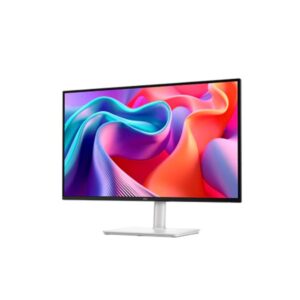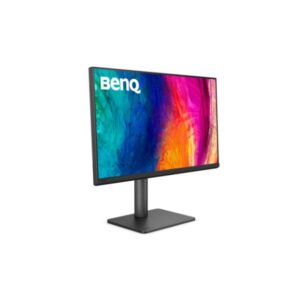
🖥 Monitor Comparison

Dell S2725DSM vs Benq PD2706QN

🎮 Best for Gaming
🖥 QHD 2K💡 IPS⚡ 144Hz
Dell Dell S2725DSM

Dell S2725DSM

3.7 /5 ★★★★
27-inchSize Class
IPSPanel Type
2560 x 1440Resolution
109 PPIPixel Density
🏆 Best Overall
🖥 QHD 2K💡 IPS⚡ 60Hz
Benq Benq PD2706QN

Benq PD2706QN

3.9 /5 ★★★★
27-inchSize Class
IPSPanel Type
2560 x 1440Resolution
109 PPIPixel Density
🖥 Monitor Comparison Overview

The clearest split between the Dell S2725DSM and the Benq PD2706QN is refresh rate. Dell S2725DSM runs at 144Hz versus 60Hz on the Benq PD2706QN. That gap is meaningful in fast-paced games — enemies move more smoothly, tracking feels more responsive, and the transition from 60fps to higher frame rates is clearly visible. For everyday desktop use and productivity, both feel identically fluid.

🎯 Who Should Buy Which?
Dell S2725DSM
Dell S2725DSM
🏆 Best Overall

Buy the Dell S2725DSM if you need QHD (sharp, high-density display for detailed productiv).

  • Ergonomics — 110 mm height, pivot — adjustable for any desk setup
  • 350 cd/m² — brightness — better visibility in bright office environments
Skip it if: blacks look grey in dark viewing environments vs VA/OLED
Benq PD2706QN
Benq PD2706QN
💼 Productivity Pick

Buy the Benq PD2706QN if you need USB-C (USB-C — single-cable connection for modern laptops).

  • Daisy-chain — DisplayPort MST out — chain multiple monitors from one cable
  • QHD — sharp, high-density display for detailed productivity work
  • Ergonomics — 115 mm height, pivot — adjustable for any desk setup
Skip it if: blacks look grey in dark viewing conditions compared to VA or OLED
⚡ Quick Answer -- Who Wins Each Category?
🎮 Best for Gaming Dell S2725DSM 144Hz -- smooth competitive gaming · 4ms GtG response · VRR AMD FreeSync
💼 Best for Productivity Benq PD2706QN QHD -- balanced clarity and GPU load · 109 PPI
🖼 Best Display Quality Benq PD2706QN IPS -- accurate colour, wide angles · HDR10 DisplayHDR · 400 nits
⚡ Best Motion Clarity Dell S2725DSM 4 ms (GtG)1 ms (MPRT) response
🔌 Best Connectivity Benq PD2706QN Strongest port selection
Score Summary 16 spec groups analysed
DisplayBenq PD2706QN
GamingDell S2725DSM
OfficeBenq PD2706QN
ValueDell S2725DSM
Size Class27-inch vs 27-inch
Panel TypeIPS vs IPS
🏆
Overall WinnerBenq PD2706QN
⭐ 3.9/5 Benq View Specs →
🔑 Key Differences
Dell S2725DSM
  • Dell S2725DSM -- Refresh Rate: 144Hz (max) -- higher max Hz -- smoother motion, competitive advantage
  • Dell S2725DSM -- Brightness (Typical): 350 cd/m² -- ⚠️ lower typical brightness -- HDR scenes still benefit from panel contrast, but bright-room visibility is reduced versus higher-nit alternatives
  • Dell S2725DSM -- Adaptive Sync: AMD FreeSync
  • Dell S2725DSM -- HDR: - -- no HDR / basic HDR only
Benq PD2706QN
  • Benq PD2706QN -- Refresh Rate: 60Hz (max) -- lower max Hz -- less fluid gameplay
  • Benq PD2706QN -- Brightness (Typical): 400 cd/m² -- brighter -- better HDR impact and bright-room visibility
  • Benq PD2706QN -- Adaptive Sync: AMD FreeSync Premium VESA AdaptiveSync -- broader VRR support
  • Benq PD2706QN -- HDR: HDR10 DisplayHDR 400 -- HDR supported
🏆 Best For
🎮 Best for Gaming Dell S2725DSM ⚡ 144Hz · 4ms GtG response · VRR: AMD FreeSync
💼 Best for Office Benq PD2706QN 🔬 109 PPI
🎨 Best for Design Dell S2725DSM 🖌 IPS
🎬 Best for Movies Benq PD2706QN 📺 HDR10 DisplayHDR 40
💰 Best Value Dell S2725DSM 🏅 Best price-to-perf
⚡ Pros & Cons
Dell S2725DSM ★★★★ 3.7/5
Pros
  • IPS panel — wide 178°/178° viewing angles with accurate, consistent color reproduction
  • Anti-glare matte coating — effective reflections control for comfortable all-day use
  • QHD resolution (2560 x 1440) — 78% more pixels than FHD for crisp, detailed visuals
  • 144Hz refresh rate — significantly smoother motion than standard 60/75Hz displays
  • 4.0 ms (GtG) — clean pixel transitions for everyday content and media
  • 1 ms (MPRT) — sharper moving images with reduced perceived motion blur
  • 350 cd/m² brightness — adequate luminance for typical indoor lighting conditions
  • 99% sRGB — near-complete standard gamut for precise color work
  • Variable refresh (AMD FreeSync) — eliminates tearing and stutter for smooth gaming
  • 8-bit color panel — accurate standard-gamut color for everyday content consumption
Cons
  • IPS contrast ratio (1500 : 1) — blacks look grey in dark viewing environments vs VA/OLED
  • No USB-C or Thunderbolt — cannot connect modern laptops with single-cable convenience
  • No HDR certification — standard dynamic range only; HDR content will be tone-mapped
  • No built-in Ethernet — network hub functionality absent; separate adapter required
  • No USB hub — peripherals must connect directly to PC; impacts desk cable management
  • IPS glow — light bleed visible at screen corners in dark scenes; common IPS characteristic
  • On-screen display menus can require several button presses to navigate basic settings — verify whether this affects your specific use case before purchase
  • Matte coating slightly reduces perceived colour vibrancy compared to glossy alternatives — verify whether this affects your specific use case before purchase
  • No factory calibration certificate included — colour-critical work may need professional calibration
  • Stand assembly requires tools and time — not tool-free like some competing mount solutions
Benq PD2706QN ★★★★ 3.9/5
Pros
  • IPS panel with Nano Matte coating — wide color angles with reduced reflections for pro environments
  • HDR support (HDR10 / DisplayHDR 400) with 400 cd/m² peak — enhanced contrast for HDR media
  • QHD resolution (2560 x 1440) — 78% more pixels than FHD for noticeably crisper visuals
  • 95% DCI-P3 — professional-level wide-gamut color reproduction for accurate creative work
  • Variable refresh rate (AMD FreeSync Premium + VESA AdaptiveSync) — eliminates screen tearing and stutter for smooth gameplay
Cons
  • IPS contrast (2000 : 1) — blacks look grey in dark viewing conditions compared to VA or OLED
  • No Thunderbolt 4 — USB-C available but lacks high-speed 40 Gbps bandwidth and high-watt charging
  • Entry-tier DisplayHDR 400 — limited local dimming means HDR uplift is modest rather than dramatic
  • 60Hz refresh rate — noticeable lack of smoothness for fast gaming or scrolling compared to 144Hz+
  • No built-in Ethernet — monitor lacks wired network hub functionality
🎯 Use Case Analysis
🎮
Gaming Performance

Dell S2725DSM at 144Hz versus 60Hz -- 84Hz more smoothness for fast-paced games. Gaming-ready.

🏆 Dell S2725DSM
💼
Office & Productivity

Both displays share QHD resolution at 109 PPI. Text sharpness and screen real estate are equivalent -- consider connectivity (USB-C, KVM) and stand ergonomics for your workspace.

🏆 Benq PD2706QN
🎨
Colour & Design Work

Colour accuracy depends on gamut coverage -- see the specification table for DCI-P3 and sRGB figures. Wide-gamut panels benefit photo editors and video colourists working in HDR workflows. Neither includes a factory calibration cert — colour-critical work may require professional calibration post-purchase.

🏆 Benq PD2706QN
🎬
Multimedia & HDR

Neither display carries an HDR certification. For movies and multimedia, contrast ratio is the key differentiator — Benq PD2706QN achieves 2,000:1 versus 1,500:1, producing deeper blacks in dark scenes.

🏆 Benq PD2706QN
📊 Full Specification Comparison
Specification
Overview
Rating
7.4/10★★★★
7.8/10★★★★
Brand Dell Benq
Category Monitor Monitor
Basic Information
Brand Dell BenQ
Model S2725DSM PD2706QN
Series - DesignVue
Model Alias - DesignVue PD2706QN
Model Year 2025 2024
Display
Size Class 27-inch 27-inch
💡Panel Type ? IPS IPS
Curvature -- --
🖥️Resolution 2560 x 1440 2560 x 1440
Aspect Ratio 16:9 16:9
🔬Pixel Density 109 PPI 109 PPI
Pixel Pitch 0.233 mm (millimeters) 0.233 mm (millimeters)
Display Area 92.04 % (percent) 88.65 % (percent)
Color & HDR
Color Depth 8 bits 10 bits (8 bits + FRC) (FRC: Yes)
Colors 16777216 colors 1073741824 colors
sRGB 99% -
DCI-P3 Coverage - 95%
HDR Support ? - HDR10
DisplayHDR 400
Brightness & Contrast
☀️Brightness (Typical) 350 cd/m² 400 cd/m²
☀️Peak Brightness - 400 cd/m²
🌗Contrast 1500 : 1 2000 : 1
Performance
🎮Refresh Rate 48 Hz - 144 Hz 48 Hz - 60 Hz
Response Time 4 ms (GtG)1 ms (MPRT) -
Adaptive Sync ? AMD FreeSync AMD FreeSync Premium
VESA AdaptiveSync
Display Technologies
Advanced Display Technologies Panel Technology: -
Backlight: W-LED
Viewing Angles: 178° / 178° (Horizontal / Vertical)
MPRT Response: 1 ms (MPRT)
Dynamic Contrast: -
Input Lag: -
Screen Coating: Anti-glare/Matte (3H)
Panel Technology: Nano Matte Panel
Backlight: W-LED
Viewing Angles: 178° / 178° (H / V)
MPRT Response: -
Dynamic Contrast: -
Input Lag: -
Screen Coating: Anti-glare/Matte
Camera
Camera No No
Audio
🔊Audio 2 x 3 W (watts) 2 x 3 W (watts) | 3.5 mm Audio Out
Connectivity & Ports
Ports 1 x HDMI 2.1 (TMDS)
1 x DisplayPort 1.4
High-bandwidth Digital Content Protection (HDCP) 1.4
1 x USB 3.2 (Type-C; upstream; PC connection)
1 x USB 3.2 (Type-C; upstream; 90W; DP Alt Mode)
1 x USB 3.2 (Type-C; MST for Daisy Chaining)
1 x USB 3.2 (Type-C; downstream; 7.5W)
1 x USB 3.2 (Type-A; Gen 1; 5 Gbps; downstream; 7.5W)
2 x USB 3.2 (Type-A; downstream)
1 x HDMI 2.0
1 x DisplayPort 1.4 (in)
1 x 3.5 mm Audio Out
High-bandwidth Digital Content Protection (HDCP) 1.4
Wireless - -
Ergonomics
VESA Mount 100 x 100 mm 100 x 100 mm
Height Adjustment 110 mm 115 mm
Pivot ±90° ±90°
Swivel ±30° ±15°
Tilt -5° to +21° -5° to +20°
Removable Stand Yes Yes
Gaming Features
Gaming Features AMD FreeSync technology 5-way controller
Adaptive-Sync technology
AMD FreeSync Premium technology
AMA (Advanced Motion Accelerator)
Smart & Software Features
Operating System - -
Smart Features 3-sided bezelless design
Adaptive-Sync technology
ComfortView Plus
Flicker-free technology
Low Blue Light
AQColor technology
Auto Pivot
BenQ Uniformity technology
CalMAN Verified
DualVIew - two color settings on the same image
Flicker-free technology
ICCsync
KVM Switch
Low Blue Light
Overscan
Palette Master Ultimate
Pantone Connect Premium
Pantone Validated
Pantone Skintone Validated
Solidworks
Power Consumption
Voltage 100–240V 100–240V
Frequency 50/60Hz 50/60Hz
Average Consumption 21.4W -
Maximum Consumption 65W -
Standby 0.3W -
Certificates
Certificates ENERGY STAR 8.0
RoHS
TÜV Rheinland Eye Comfort 3.0 (4-star rating)
TÜV Rheinland Flicker Free Certified
TÜV Rheinland Low Blue Light Certified (Hardware Solution)
Energy Star
EPEAT Gold
TCO Certified
TÜV Rheinland Flicker-free Certified
TÜV Rheinland Low Blue Light Certified
Design, Build & Dimensions
Without Stand Width 611.34 mm 614 mm
Without Stand Height 355.98 mm 368 mm
Without Stand Depth 58.87 mm 107.11 mm
⚖️Without Stand Weight 4.34 kg -
With Stand Width 611.34 mm 614 mm
With Stand Height 390.13 mm 430 mm
With Stand Depth 201.83 mm 220.2 mm
⚖️With Stand Weight 6.39 kg 8.22 kg
Color Ash White Black
Operating Conditions
Temperature 0°C – 40°C -
Humidity 10% – 80% -
🖥 Display Quality Analysis 🏆 Benq PD2706QN

Both displays use IPS panel technology, so panel-level contrast and viewing angles are comparable. The differences come down to calibration, brightness, and HDR tier.

Dell S2725DSM
IPS
1,500:1 contrast · 99% sRGB
Benq PD2706QN
IPS
2,000:1 contrast · 400 nits · HDR10 DisplayHDR 40 · 95% DCI-P3
Display winner: Benq PD2706QN -- IPS panel · 2,000:1 contrast · 95% DCI-P3 · HDR10 DisplayHDR
🎮 Gaming Performance Analysis 🏆 Dell S2725DSM

Refresh rate is the headline gaming spec. Dell S2725DSM runs at 144Hz versus 60Hz on Benq PD2706QN -- a 84Hz gap. 144Hz is the entry point for serious gaming. The Dell S2725DSM reaches this threshold; the Benq PD2706QN at 60Hz is adequate for casual gaming but not competitive play.On response time: Dell S2725DSM (4 ms (GtG)1 ms (MPRT)) versus Benq PD2706QN (-). VRR (Variable Refresh Rate) eliminates screen tearing by syncing the monitor to your GPU's frame output. Both monitors support adaptive sync: Dell S2725DSM with AMD FreeSync, and Benq PD2706QN with AMD FreeSync Premium VESA AdaptiveSync.

Dell S2725DSM
144Hz
4ms GtG · 1ms MPRT · VRR: AMD FreeSync
Benq PD2706QN
60Hz
- · VRR: AMD FreeSync Premium
Gaming pick: Dell S2725DSM -- 144Hz · 4ms GtG response · AMD FreeSync
🌟 HDR & OLED Analysis

Only Benq PD2706QN carries an HDR certification (HDR10 DisplayHDR 400). HDR certification not disclosed for Dell S2725DSM -- assume SDR-only unless confirmed by the manufacturer.

Dell S2725DSM
HDR certification not disclosed
1,500:1 · IPS
Benq PD2706QN
HDR10 DisplayHDR 400
400 nits · 2,000:1 · IPS
💼 Productivity Analysis 🏆 Benq PD2706QN

Both monitors share QHD resolution at 109 PPI, so text sharpness and screen real estate are equivalent. Neither monitor offers full ergonomic adjustment. A VESA monitor arm is recommended for proper positioning if you spend long hours at your desk.

Dell S2725DSM
Resolution
2560 x 1440
Pixel Density
109 PPI
Panel Type
IPS
Screen Coating
--
Viewing Angle
--
Aspect Ratio
--
Colour Depth
--
sRGB
99%
DCI-P3
-
Brightness
350 cd/m²
Eye Care / Certs
Not specified
Stand Adjust
Pivot, Height (110 mm)
VESA Mount
Not specified
USB-C
✗ No USB-C
USB Hub
--
KVM Switch
--
Refresh Rate
48 Hz - 144 Hz
Screen Size
27-inch
Productivity Score
94% of max score
Score based on: USB-C PD (20%), Resolution/PPI (20%), KVM (15%), Ergonomic range (15%), Ethernet (10%), Webcam (10%), sRGB accuracy (10%)
Benq PD2706QN 🏆
Resolution
2560 x 1440
Pixel Density
109 PPI
Panel Type
IPS
Screen Coating
--
Viewing Angle
--
Aspect Ratio
--
Colour Depth
--
sRGB
-
DCI-P3
95%
Brightness
400 cd/m²
Eye Care / Certs
Not specified
Stand Adjust
Pivot, Height (115 mm)
VESA Mount
Not specified
USB-C
✓ USB-C
USB Hub
✓ USB Hub
KVM Switch
--
Refresh Rate
48 Hz - 60 Hz
Screen Size
27-inch
Productivity Score
100% of max score
Score based on: USB-C PD (20%), Resolution/PPI (20%), KVM (15%), Ergonomic range (15%), Ethernet (10%), Webcam (10%), sRGB accuracy (10%)
🎯 GPU Requirements

Both monitors share QHD (1440p) resolution, but refresh rate targets differ. Pushing Dell S2725DSM to 144Hz requires more GPU headroom than 60Hz. Mid-range and budget GPU tiers below reflect the lower 60Hz target; top-tier GPUs unlock the full 144Hz potential.

🖥 Dell S2725DSM
QHD (1440p) 144Hz AMD FreeSync
🖥 Benq PD2706QN
QHD (1440p) 60Hz AMD FreeSync Premium VESA A
🖥
Dell S2725DSM
QHD (1440p) 144Hz AMD FreeSync
🏆 Top-Tier Top-Tier -- Max Settings, 144Hz+ Guaranteed QHD 144Hz AAA
NVIDIA GeForce RTX 5070 Ti / RTX 5070
Easily maxes 144Hz at ultra settings in any title.
AMD Radeon RX 9070 XT / RX 9070
Strong rasterization -- competitive 1440p gaming at max settings.
NVIDIA GeForce RTX 4080 / RTX 4070 Ti Super
Last-gen overkill for QHD -- guaranteed max Hz at max settings.
⭐ Mid-Tier · Sweet Spot Mid-Tier / Sweet Spot -- Up to 144Hz QHD 72–144Hz
NVIDIA GeForce RTX 5060 Ti / RTX 4070 Super
Sweet spot -- max settings in most titles; DLSS covers demanding ones.
AMD Radeon RX 9060 XT / RX 7800 XT
Great mid-range 1440p -- consistent high frame rates at high settings.
💰 Budget-Tier Budget-Tier -- Medium-High Settings QHD 60–120Hz
NVIDIA GeForce RTX 4060 / RTX 3060 Ti
Solid budget 1440p -- demanding games may need settings reduction for 100Hz+.
AMD Radeon RX 7700 XT / RX 7600 XT
Competitive budget option -- good price-to-performance at 1440p.
🖥
Benq PD2706QN
QHD (1440p) 60Hz AMD FreeSync Premium VESA Ada
🏆 Top-Tier Top-Tier -- Max Settings QHD 60Hz
NVIDIA GeForce RTX 5060 Ti / RTX 4070
Overkill for QHD 60Hz -- max settings guaranteed.
AMD Radeon RX 9060 XT / RX 7800 XT
More than enough for QHD at this refresh rate.
⭐ Mid-Tier · Sweet Spot Mid-Tier -- Up to 60Hz QHD 60–60Hz
NVIDIA GeForce RTX 5060 / RTX 4060
Best value -- max settings in most games with DLSS.
AMD Radeon RX 7600 XT / RX 7600
Solid budget 1440p pick -- strong frame rates at high settings.
💰 Budget-Tier Budget-Tier -- Medium Settings QHD 60–60Hz
NVIDIA GeForce RTX 3060 / GTX 1660 Super
Handles QHD -- demanding titles may need settings reduction.
AMD Radeon RX 7500 XT / RX 6600
Entry-level 1440p -- good for esports at full refresh.
💡 AMD FreeSync: Dell S2725DSM supports FreeSync -- works natively with RX GPUs, and also with NVIDIA (G-Sync Compatible mode).
💡 Refresh Rate & Ports: To reach the maximum 144Hz refresh rate on Dell S2725DSM, use DisplayPort -- HDMI 2.0 caps at 4K/60Hz and HDMI 2.1 caps at 4K/144Hz for most implementations. Verify your GPU has a DisplayPort output.
💡 DLSS 4 / FSR 4: Modern upscaling significantly reduces GPU load while maintaining visual quality. NVIDIA RTX 50-series cards support DLSS 4 Multi-Frame Generation; AMD RX 9000-series support FSR 4. Both can effectively double or triple frame rates in supported titles at the cost of minor image softening.
🔌 Connectivity & Features 🏆 Benq PD2706QN

Benq PD2706QN has a significantly richer connectivity package. Key advantages: USB-C 90W -- single cable powers and connects a laptop; daisy chain -- extend signal to a second monitor without extra cables. The Dell S2725DSM covers standard display inputs but lacks these hub and convenience features -- if you work at a desk and connect a laptop daily, this gap matters considerably.

Dell S2725DSM
HDMI 2.1 + DP 1.x
HDMI 2.1 · Connectivity score: 5/10
Benq PD2706QN
USB-C 90W PD + DP 1.x
Daisy Chain · USB Hub · Connectivity score: 8/10
Connectivity winner: Benq PD2706QN -- USB-C 90W

Connectivity score methodology: USB-C Power Delivery (2 pts) · USB hub ports (2 pts) · Ethernet (1 pt) · HDMI 2.1 (1 pt) · KVM switch (2 pts) · Thunderbolt (2 pts). Higher score = more complete connectivity package. Ties broken in favour of USB-C power delivery.

💺 Design & Ergonomics

Both monitors have basic stand adjustment. If you need precise positioning, a VESA-compatible monitor arm is recommended -- check the spec table for VESA mount support (typically 75×75mm or 100×100mm).

Dell S2725DSM
Basic / VESA
Ergo score: 0/8
Benq PD2706QN
Basic / VESA
Ergo score: 0/8
🏆 Final Verdict 2 monitors compared
🎮 Gaming
Dell S2725DSM
144Hz · VRR AMD FreeSync · 4ms GtG
🖥 Display Quality
Benq PD2706QN
IPS, HDR10 DisplayHDR 40 · 95% DCI-P3 · 400 nits · HDR10 DisplayHD
💼 Office & Work
Benq PD2706QN
QHD
🏆
Overall Winner Benq PD2706QN 3.9/5 editorial rating · wins 5 of 8 use-case categories 🏆 Best Overall Pick
View Full Specs →

Bottom line: For most buyers, the Benq PD2706QN is the stronger choice, leading on USB-C single-cable connectivity, full height and tilt adjustment, QHD resolution. The Dell S2725DSM is worth considering if cost is the deciding factor or if its specific connectivity or form factor better matches your desk setup. Check the use-case categories above to see which display wins for your primary activity.

Dell S2725DSM vs Benq PD2706QN: What Actually Matters

On paper, Dell S2725DSM and Benq PD2706QN share several headline specs -- but the differences that matter emerge when you look at panel characteristics, factory calibration, and ergonomic flexibility rather than just the spec sheet totals.

If we had to pick one for most people, the Benq PD2706QN earns the recommendation on overall specification strength and a 3.9/5 composite score. That said, the right answer genuinely depends on your GPU, your use case split between gaming and productivity, and whether you spend time in a bright or dark room.

Strengths Worth Knowing

The Dell S2725DSM stands out for ips panel — wide 178°/178° viewing angles with accurate, consistent color reproduction and anti-glare matte coating — effective reflections control for comfortable all-day use. The main compromise: ips contrast ratio (1500 : 1) — blacks look grey in dark viewing environments vs va/oled.

The Benq PD2706QN stands out for ips panel with nano matte coating — wide color angles with reduced reflections for pro environments and hdr support (hdr10 / displayhdr 400) with 400 cd/m² peak — enhanced contrast for hdr media. The main compromise: ips contrast (2000 : 1) — blacks look grey in dark viewing conditions compared to va or oled.

❓ Frequently Asked Questions

For gaming, the Dell S2725DSM has the edge thanks to its 144Hz maximum refresh rate. Higher refresh rates produce smoother motion and reduce perceived input lag -- critical advantages in competitive shooters and action titles. If both share the same Hz, compare response time in the spec table above.

Both the Dell S2725DSM and Benq PD2706QN use IPS -- the differences lie in calibration, colour volume, and connectivity rather than panel technology. Check the spec table for DCI-P3 coverage and brightness figures.

For all-day productivity work -- documents, spreadsheets, coding, and content creation -- resolution and panel colour accuracy matter most. The Benq PD2706QN is the stronger daily driver based on overall specification score. For long hours, also look for a model with flicker-free backlight and low blue-light mode -- check the spec table above for those details.

The Benq PD2706QN is the stronger all-round choice based on its overall score of 3.9/5. That said, if your priority is specifically competitive gaming at the highest possible refresh rate, see the Quick Answer section at the top of this page for use-case-specific recommendations. The Dell S2725DSM is not a bad choice -- it simply trails on overall specification weight, which may not reflect the single spec most important to your setup.

IPS (In-Plane Switching) panels are the most common in quality monitors -- they offer wide viewing angles and accurate colour reproduction, making them ideal for design work, general use, and brightly lit rooms. VA (Vertical Alignment) panels have a higher native contrast ratio, producing deeper blacks, which benefits dark-room gaming and movie watching. OLED panels work differently: each pixel emits its own light, enabling true blacks, near-infinite contrast, and perfect viewing angles -- at the cost of higher price and some burn-in risk with static content.

For non-gaming use -- web browsing, documents, video calls -- 60Hz to 75Hz is completely adequate and you will not feel the difference from a 144Hz or 240Hz panel. Where higher refresh rates genuinely improve the experience beyond gaming is in cursor smoothness during scrolling and desktop navigation, which some users appreciate. In short: the step from 60Hz to 75Hz has minimal benefit; the step from 60Hz to 144Hz is noticeable but not essential for productivity.

🖥
Editorial Display Input -- Monitor & TV Comparison Database Specifications verified from manufacturer data · Updated May 2026 · No sponsored rankings
✓ Verified Specs ✓ No Paid Placements ✓ 16 Spec Groups

Disclaimer: You can write your own disclaimer from APS Settings -> General -> Disclaimer Note.