
GIGABYTE AORUS Elite FO27Q24G vs GIGABYTE MO27Q28G Comparison
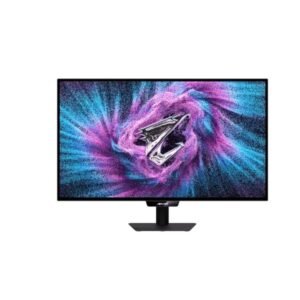
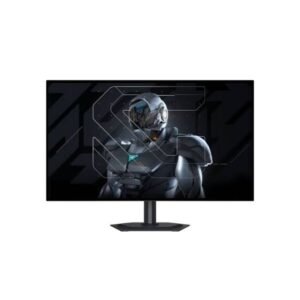
The MO27Q28G edges ahead on refresh rate (280Hz vs 240Hz) and HDR, with 1500-nit peak brightness and DisplayHDR 500 True Black against 1300 nits on the FO27Q24G - both otherwise share the same 26.5-inch OLED panel, 0.03ms response and FreeSync/G-Sync support. For faster competitive gaming and stronger HDR specs, take the MO27Q28G; the FO27Q24G's glossy finish and 240Hz QHD performance are still excellent if that gap doesn't matter to you.
Both monitors are built for fast gaming, but the GIGABYTE MO27Q28G reaches 280Hz while the AORUS Elite FO27Q24G tops out at 240Hz. Both list an extremely fast 0.03ms response time and support AMD FreeSync and NVIDIA G-Sync. The extra refresh headroom makes the MO27Q28G more appealing for competitive players who can consistently drive very high frame rates.
The two displays share a 26.5-inch 2560×1440 OLED format with 110 PPI, but their panel designs differ. The FO27Q24G uses a glossy OLED panel with an anti-reflective coating, while the MO27Q28G uses a matte OLED display. The MO27Q28G also lists 4th Gen OLED technology and slightly higher DCI-P3 coverage at 99.5%, compared with 98.5% on the FO27Q24G.
The MO27Q28G has the stronger HDR specification, with 1500 cd/m² peak brightness and DisplayHDR 500 True Black, compared with 1300 cd/m² and DisplayHDR 400 True Black on the FO27Q24G. Both provide 10-bit color, 1,500,000:1 contrast, and 178-degree viewing angles. For HDR highlights and demanding gaming scenes, the MO27Q28G has the specification advantage.
Both monitors provide two HDMI 2.1 ports, DisplayPort 1.4, USB-C video input, and 3.5mm audio. The MO27Q28G adds two USB-A ports, USB-B upstream, KVM, and 18W USB-C power delivery, while the FO27Q24G provides USB-C data at 5Gbps and 15W power delivery. This makes the MO27Q28G much more useful as a combined gaming and productivity monitor.
Both displays offer a similarly flexible stand with 130mm height adjustment, tilt, swivel, pivot, and portrait mode, so there is little difference in everyday positioning. The MO27Q28G has a slightly smaller stand depth, while the FO27Q24G is a little more compact in width. In practice, screen finish and connectivity are more important differentiators than ergonomics here.
| Specification | ||
|---|---|---|
| Overview | ||
| Rating | 7.8 / 10 | 8.2 / 10 |
| Brand | Gigabyte | Gigabyte |
| Category | Monitor | Monitor |
| Model Information | ||
| Brand | Gigabyte | Gigabyte |
| Model | AORUS Elite FO27Q24G | MO27Q28G |
| Model Alias | AORUS FO27Q24G | -- |
| Full Product Name | Gigabyte AORUS Elite FO27Q24G | Gigabyte MO27Q28G |
| Model Year | 2026 | 2025 |
| Monitor Type | Gaming Monitor | Gaming Monitor |
| Monitor Category | Premium Gaming Monitor | Multi-Functional Gaming Monitor |
| Market Position | Premium / Flagship Gaming | Multi-Functional Gaming |
| Primary Use | Competitive Esports & High-End Immersive Gaming | Gaming with Productivity/KVM Multi-Tasking |
| Region / Variant | Not specified | Not specified |
| Launch Status | Model year 2026 | Model year 2025 |
| Available Colors | Black | Black |
| Warranty | 3 years | 3 years |
| Panel Warranty | 3 years | 3 years |
| Burn-In Warranty | 3 years - Gigabyte's QD-OLED monitor warranty explicitly covers 'protection against potential panel image retention issues' per company statement; per Gigabyte press materials, Aug 2026 | 3 years - Gigabyte's QD-OLED monitor warranty explicitly covers 'protection against potential panel image retention issues' per company statement; per Gigabyte press materials, Aug 2026 |
| Display & Panel | ||
| Screen Size | 26.5 in (inches) | 26.5 in (inches) |
| Exact Diagonal | 673.1 mm (millimeters) / 67.31 cm (centimeters) / 26.5 in (inches) / 2.2083 ft (feet) | 673.1 mm (millimeters) / 67.31 cm (centimeters) / 26.5 in (inches) / 2.2083 ft (feet) |
| Screen Format | 16:9 | 16:9 |
| Aspect Ratio | 1.778:1 / 16:9 | 1.778:1 / 16:9 |
| Active Display Width | 586.75 mm (millimeters) / 58.675 cm (centimeters) / 23.1004 in (inches) / 1.925 ft (feet) | 586.75 mm (millimeters) / 58.675 cm (centimeters) / 23.1004 in (inches) / 1.925 ft (feet) |
| Active Display Height | 330.05 mm (millimeters) / 33.005 cm (centimeters) / 12.9941 in (inches) / 1.0828 ft (feet) | 330.05 mm (millimeters) / 33.005 cm (centimeters) / 12.9941 in (inches) / 1.0828 ft (feet) |
| Display Area | -- | 91.49 % (percent) |
| Panel Type? | OLED | OLED |
| Panel Technology | OLED | OLED |
| Panel Manufacturer | LG Display | LG Display |
| OLED Technology | -- | Primary RGB Tandem structure |
| OLED Generation | -- | 4th Gen OLED |
| Self-Emissive Display | Yes | Yes |
| 3D Support | No | No |
| Screen Coating | Glossy / Anti-glare and anti-reflection coating / Real Black Glossy | Anti-glare/Matte / Meta 3.0 WOLED display |
| Resolution & Pixel Details | ||
| Native Resolution | 2560 x 1440 pixels / Quad HD (QHD) / 1440p | 2560 x 1440 pixels / Quad HD (QHD) / 1440p |
| Pixel Density | 110 ppi (pixels per inch) / 43 ppcm (pixels per centimeter) | 110 ppi (pixels per inch) / 43 ppcm (pixels per centimeter) |
| Pixel Pitch | 0.229 mm (millimeters) / 0.0229 cm (centimeters) / 0.009 in (inches) / 0.0008 ft (feet) | 0.229 mm (millimeters) / 0.0229 cm (centimeters) / 0.009 in (inches) / 0.0008 ft (feet) |
| Picture Quality & Color | ||
| Panel Bit Depth | 10 bits | 10 bits |
| FRC | No | No |
| Display Colors | 1073741824 colors / 30 bits | 1073741824 colors / 30 bits |
| Typical Brightness | -- | 330 cd/m² (candela per square meter) |
| Peak Brightness | 1300 cd/m² (candela per square meter) | 1500 cd/m² (candela per square meter) |
| Static Contrast Ratio | 1500000 : 1 | 1500000 : 1 |
| Horizontal Viewing Angle | 178 ° (degrees) | 178 ° (degrees) |
| Vertical Viewing Angle | 178 ° (degrees) | 178 ° (degrees) |
| HDR Support? | DisplayHDR 400 True Black /HDR10 |
DisplayHDR 500 True Black /HDR10 |
| HDR10? | Yes | Yes |
| DCI-P3 Coverage | 98.5 % (percent) | 99.5 % (percent) |
| Rec. 2020 Coverage | -- | 84 % (percent) |
| Refresh Rate, Response & Gaming | ||
| Native Refresh Rate | 240 Hz | 280 Hz |
| Refresh Rate Range | 48 Hz - 240 Hz (hertz) | 48 Hz - 280 Hz (hertz) |
| Minimum Response Time | 0.03 ms (milliseconds) / 0.0000 s (seconds) | 0.03 ms (milliseconds) / 0.0000 s (seconds) |
| AMD FreeSync? | Yes | Yes |
| NVIDIA G-Sync? | Yes | Yes |
| Black Equalizer | -- | Yes |
| Crosshair | Yes | Yes |
| Picture-by-Picture | Yes | Yes |
| Picture-in-Picture | Yes | Yes |
| Ports & Connectivity | ||
| HDMI Ports | 2 | 2 |
| HDMI Version | 2.1 | 2.1 |
| HDMI CEC | -- | Yes |
| DisplayPort Input | 1 | 1 |
| DisplayPort Version | 1.4 | 1.4 |
| USB-C Video Input | Yes | Yes |
| DisplayPort Alt Mode | Yes | Yes |
| HDCP Support | -- | Yes |
| USB-C Data Speed | 5 Gbps (USB 3.2 Gen 1) | -- |
| USB-C Power Delivery | 15 W | 18 W |
| USB-A Ports | -- | 2 |
| USB-B Upstream | -- | Yes |
| KVM Switch | -- | Yes |
| Audio Output | 3.5 mm | 3.5 mm |
| Headphone Output | 3.5 mm Audio Out | 3.5 mm Audio Out |
| Audio, Camera, Network & Smart Features | ||
| Built-In Speakers | -- | 2 x 5 W (watts) |
| Built-In Camera | No | No |
| Ergonomics & Stand | ||
| VESA Mount | Yes | Yes |
| VESA Size | 100 x 100 mm | 100 x 100 mm |
| Removable Stand | Yes | Yes |
| Height Adjustment | Yes | Yes |
| Height Adjustment Range | 130 mm (millimeters) / 13 cm (centimeters) / 5.1181 in (inches) / 0.4265 ft (feet) | 130 mm (millimeters) / 13 cm (centimeters) / 5.1181 in (inches) / 0.4265 ft (feet) |
| Tilt Adjustment | Yes | Yes |
| Forward Tilt | 5 ° (degrees) | 5 ° (degrees) |
| Backward Tilt | 21 ° (degrees) | 21 ° (degrees) |
| Swivel Adjustment | Yes | Yes |
| Left Swivel | 15 ° (degrees) | 15 ° (degrees) |
| Right Swivel | 15 ° (degrees) | 15 ° (degrees) |
| Left Pivot | 9 ° (degrees) | 0 ° (degrees) |
| Right Pivot | 90 ° (degrees) | 90 ° (degrees) |
| Portrait Mode | Yes | Yes |
| Dimensions, Weight & Design | ||
| Dimensions With Stand | 605.22 mm (millimeters) x 391.6 mm (millimeters) x 204.51 mm (millimeters) (W x H x D) | 604.4 mm (millimeters) x 496.5 mm (millimeters) x 187.5 mm (millimeters) (W x H x D) |
| Dimensions Without Stand | -- | 604.4 mm (millimeters) x 350.2 mm (millimeters) x 54.4 mm (millimeters) (W x H x D) |
| Weight With Stand | -- | 6 kg (kilograms) / 13.23 lbs (pounds) |
| Weight Without Stand | -- | 4.05 kg (kilograms) / 8.93 lbs (pounds) |
| Stand Depth | 204.51 mm (millimeters) / 20.451 cm (centimeters) / 8.0516 in (inches) / 0.671 ft (feet) | 187.5 mm (millimeters) / 18.75 cm (centimeters) / 7.3819 in (inches) / 0.6152 ft (feet) |
| Power & Operating Conditions | ||
| 110V Input Range | 100 V - 120 V (volts) | 100 V - 120 V (volts) |
| 220V Input Range | 220 V - 240 V (volts) | 220 V - 240 V (volts) |
| AC Frequency | 50 Hz - 60 Hz (hertz) | 50 Hz - 60 Hz (hertz) |
| Average Power Consumption | 49 W (watts) / Power Board Built-in | 35 W (watts) / Power board built-in |
| Sleep Consumption | 0.5 W (watts) | 0.5 W (watts) |
| Off Consumption | 0.3 W (watts) | 0.3 W (watts) |
| Operating Temperature | 0 °C - 40 °C (degrees Celsius) / 32 °F - 104 °F (degrees Fahrenheit) | -- |
| Operating Humidity | 10 % - 85 % (percent) | -- |
| Operating Altitude | 3657.6 m (meters) / 12000 ft (feet) | -- |
| Storage Temperature | -25 °C - 55 °C (degrees Celsius) / -13 °F - 131 °F (degrees Fahrenheit) | -- |
| Storage Humidity | 5 % - 93 % (percent) | -- |
| Storage Altitude | 12192 m (meters) / 40000 ft (feet) | -- |
| Eye Care, Protection & Additional Features | ||
| Flicker-Free | Yes | Yes |
| Low Blue Light | Yes | -- |
| OLED Protection | Yes | Yes |
| Burn-In Protection | Panel image-retention protection referenced in Gigabyte QD-OLED warranty coverage (see Burn-In Warranty); specific on-screen protection feature name not separately confirmed | Panel image-retention protection referenced in Gigabyte QD-OLED warranty coverage (see Burn-In Warranty); specific on-screen protection feature name not separately confirmed |
| Custom Heatsink | -- | Yes |
| Screen Split | Yes | Yes |
| Additional Monitor Features | 4-sided borderless design, Advanced Cooling System, AIOLED Care Pro, AI Tactical Features (HUD and Crosshair)AMDFreeSync PremiumFlicker-free technology, Game Assist (Timer / Crosshairs / Pi P / Pb P)Low Blue Light, Night Vision, NVIDIA G-Sync Compatible, OSD SidekickPicture-by-PicturePicture-in-Picture, Ultra Clear technology; Security lock slot; Other certifications: CCC, CEL |
4-sided borderless design, 6-axis color control, Advanced Cooling System, AIOLED Care, AI Tactical FeaturesAMDFreeSync Premium ProApply Picture ModeAuto-UpdatedBlack Equalizer 2.0Blue Light ReductionCustomized HeatsinkFlicker-free technology, Game Assist (Picture-by-Picture /Picture-in-Picture / Crosshairs / Timer), Graphene Thermal FilmKVM SwitchNVIDIA G-Sync CompatibleOSD SidekickRGB Fusion 2.0Tactical Switch 2.0Ultra Clear Motion Clarity |
| Certifications, Standards & Licenses | ||
| TÜV Flicker-Free | Yes | -- |
| TÜV Low Blue Light | Yes | -- |
| VESA DisplayHDR? | DisplayHDR 400 True Black | DisplayHDR 500 True Black |
| ClearMR | -- | 15000 |
| RoHS | Yes | -- |
| CE | Yes | -- |
| FCC | Yes | -- |
| UL | Yes | Yes |
| Included Accessories | ||
| HDMI Cable | HDMI cable | HDMI cable |
| DisplayPort Cable | -- | DisplayPort cable |
| USB Upstream Cable | -- | USB cable |
| Packaging Information | ||
| Package Dimensions | -- | 795 mm (millimeters) x 475 mm (millimeters) x 131 mm (millimeters) (W x H x D) |
| Package Width | -- | 795 mm (millimeters) / 79.5 cm (centimeters) / 31.2992 in (inches) / 2.6083 ft (feet) |
| Package Height | -- | 475 mm (millimeters) / 47.5 cm (centimeters) / 18.7008 in (inches) / 1.5584 ft (feet) |
| Package Depth | -- | 131 mm (millimeters) / 13.1 cm (centimeters) / 5.1575 in (inches) / 0.4298 ft (feet) |
| Package Weight | -- | 8.75 kg (kilograms) / 19.29 lbs (pounds) |
Methodology: The verdict and comparison notes on this page are written by an editor after reviewing the full specification table below; they are not generated by an automated scoring formula. Conclusions are based on manufacturer-listed specifications only - no benchmark testing, measured brightness or hands-on use is claimed unless stated. Missing values are left blank rather than estimated. Report an error.
Updated: September 2026
Frequently Asked Questions
The MO27Q28G is the stronger overall monitor because it combines 280Hz, 1500-nit peak brightness, newer OLED technology, and a more complete USB and KVM feature set.
Yes. The MO27Q28G reaches 280Hz, while the AORUS Elite FO27Q24G reaches 240Hz. Both have a listed 0.03ms response time and support FreeSync and G-Sync.
The MO27Q28G has the stronger listed HDR specification, with 1500-nit peak brightness and DisplayHDR 500 True Black. The FO27Q24G is rated at 1300 nits and DisplayHDR 400 True Black.
Yes. It adds two USB-A ports, USB-B upstream, KVM support, and slightly higher USB-C power delivery, making it better suited to a multi-device desk setup.
The AORUS Elite FO27Q24G uses a glossy OLED finish, while the MO27Q28G uses a matte anti-glare surface. The better choice depends on whether you prefer a more reflective glossy presentation or reduced reflections.
Go with the MO27Q28G for 280Hz gaming, stronger HDR specifications, and better connectivity. The FO27Q24G is still a good choice for 240Hz QHD gaming if you prefer its glossy OLED presentation.