
TCL 85C6K Pro vs TCL 85C6K Comparison
TCL 85C6K Pro vs TCL 85C6K compares two TVs with different strengths for picture quality, motion, and everyday use. TCL 85C6K Pro is specified with 84.6 in / HVA / 4K / Mini LED, while TCL 85C6K uses 84.6 in / HVA / 4K / Mini LED. Both are listed at 48 Hz – 144 Hz refresh. Both list 93 % DCI-P3 coverage. The better choice depends on which of those differences matters most in your setup.
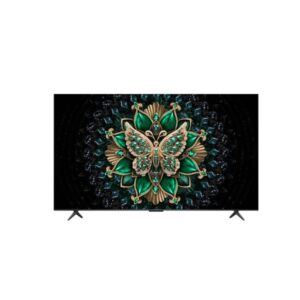
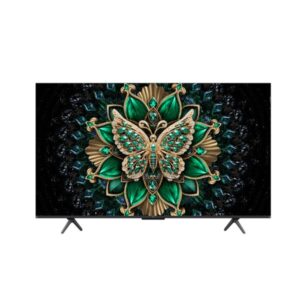
TCL 85C6K Pro and TCL 85C6K are closely matched in the supplied core specifications, so there is no strong all-purpose winner on paper. The deciding factors are the smaller differences in ports, stand flexibility, smart features, or current price. TCL 85C6K Pro uses 4K, while TCL 85C6K uses 4K. Refresh is listed at 48 Hz - 144 Hz versus 48 Hz - 144 Hz. Choose the model whose strengths match your actual workload or viewing habits.
TCL 85C6K Pro uses 84.6 in / HVA / 4K / Mini LED, while TCL 85C6K uses 84.6 in / HVA / 4K / Mini LED. TCL 85C6K Pro lists 1000 cd / m²; the supplied data for TCL 85C6K does not publish an equivalent figure. Both list 93 % DCI-P3 coverage.
TCL 85C6K Pro lists 48 Hz - 144 Hz, while TCL 85C6K lists 48 Hz - 144 Hz.
Both use Google TV. TCL 85C6K Pro lists 2 x 10 W; the supplied data for TCL 85C6K does not publish an equivalent figure.
Because the core specifications are closely matched, current price, warranty, and availability should carry more weight. The supplied data does not include live pricing, so neither model can be called the better value unconditionally.
| Specification | ||
|---|---|---|
| TV Overview | ||
| Rating | 8.4 / 10 | 8.4 / 10 |
| Brand | tcl | tcl |
| Category | TV | TV |
| Television Identity & Market | ||
| Brand | TCL | TCL |
| Series | C6K Pro | C6K / Q6C |
| Model | 85C6K Pro | 85C6K |
| Full Product Name | TCL 85C6K Pro | -- |
| Model Year | 2026 | 2025 |
| TV Category | Mid-Premium Tier | -- |
| Market Position | Mid-Premium QD-Mini LED | -- |
| Primary Use | Home Entertainment & Everyday HDR Viewing | -- |
| Region / Variant | Not specified | -- |
| Launch Status | 2026 model year | -- |
| Available Colors | Black | Black |
| Warranty | 1 year limited warranty | -- |
| Screen Geometry & Format | ||
| Screen Size | 84.6 in | 84.6 in |
| Marketed Screen Size | 84.6 in | 84.6 in |
| Exact Diagonal | 2147.83 mm / 214.783 cm / 84.5602 in / 7.0467 ft | -- |
| Aspect Ratio | 1.778:1 16:9 | 1.778:1 16:9 |
| Active Display Width | 1872 mm / 187.2 cm / 73.7008 in / 6.1417 ft | -- |
| Active Display Height | 1053 mm / 105.3 cm / 41.4567 in / 3.4547 ft | -- |
| Screen-to-Body Ratio | 96.04 % | 96.04 % |
| 3D Support | No | -- |
| Panel Architecture & Light Control | ||
| Panel Manufacturer | CSOT | -- |
| Panel Type? | HVA | HVA |
| Panel Technology | VA | -- |
| Quantum Dot | Yes | -- |
| Backlight Type? | Mini LED | -- |
| Panel Bit Depth | 10 bits (8 bits + FRC) | 10 bits (8 bits + FRC) |
| FRC | Yes | -- |
| Display Colors | 1073741824 colors30 bits | 1073741824 colors30 bits |
| Surface Treatment & Viewing Layer | ||
| Screen Coating | Anti-glare/Matte | -- |
| Resolution, Scaling & Signal | ||
| Native Resolution | 3840 x 2160 pixels Ultra HD (UHD) / 4K / 2160p | 3840 x 2160 pixels Ultra HD (UHD) / 4K / 2160p |
| Pixel Density | 52 ppi | 52 ppi |
| Pixel Pitch | 0.488 mm | 0.488 mm |
| HDCP Support | Yes | Yes |
| Luminance, Blacks & Contrast | ||
| Typical Brightness | 450 cd/m² | 450 cd/m² |
| Peak Brightness | 1000 cd/m² | -- |
| Static Contrast | 5500 : 1 | 5500 : 1 |
| Static Contrast Ratio | 5500 : 1 | 5500 : 1 |
| Viewing Angles | 178 ° / 178 ° | 178 ° / 178 ° |
| Horizontal Viewing Angle | 178 ° | -- |
| Vertical Viewing Angle | 178 ° | -- |
| Color Reproduction & Calibration | ||
| DCI-P3 Coverage | 93 % | 93 % |
| Wide Color Gamut | Yes | -- |
| HDR Formats & Tone Mapping | ||
| HDR Support? | HDR10HDR10+Dolby VisionDolby Vision IQHLG (Hybrid Log Gamma) |
HDR10HDR10+Dolby VisionDolby Vision IQHLG (Hybrid Log Gamma) |
| HDR Formats? | HDR10 /HDR10+ /Dolby Vision /Dolby Vision IQ /HLG (Hybrid Log Gamma) |
-- |
| IMAX Enhanced | Yes | Yes |
| Filmmaker Mode | Yes | Yes |
| Motion Processing & Response | ||
| Native Refresh Rate | 48 Hz - 144 Hz | -- |
| Maximum Refresh Rate | 48 Hz - 144 Hz | 48 Hz - 144 Hz |
| Motion Processing | AI Motion MEMC (Motion Estimation Motion Compensation) | AI Motion MEMC (Motion Estimation Motion Compensation) |
| Motion Estimation | Yes | -- |
| Console, VRR & Game Tools | ||
| Variable Refresh Rate | Variable Refresh Rate (VRR) | Variable Refresh Rate (VRR) |
| Auto Low Latency Mode | Auto Low Latency Mode (ALLM) | Auto Low Latency Mode (ALLM) |
| High Frame Rate | Yes | Yes |
| AMD FreeSync? | AMD FreeSync Premium Pro | AMD FreeSync Premium Pro |
| Game Bar | Game Master with Game Bar | Game Master 2.0 with Game Bar |
| Picture Intelligence & AI | ||
| AI Upscaling | Yes | -- |
| Filmmaker Mode | Yes | Yes |
| Ambient Mode | Yes | -- |
| Broadcast Tuners & Reception | ||
| Built-In TV Tuner | Yes | Yes |
| Tuner Configuration | Analog (NTSC/PAL/SECAM) DVB-T DVB-T2 DVB-C DVB-S2 DVB-S | Analog (NTSC/PAL/SECAM) DVB-T DVB-T2 DVB-C DVB-S2 DVB-S |
| Analog Tuner | NTSC / PAL / SECAM | NTSC / PAL / SECAM |
| Digital Terrestrial Tuner | dvb-t | dvb-t |
| Digital Terrestrial Tuner 2 | dvb-t2 | dvb-t2 |
| Digital Cable Tuner | dvb-c | dvb-c |
| Digital Satellite Tuner | dvb-s | dvb-s |
| Digital Satellite Tuner 2 | dvb-s2 | dvb-s2 |
| Satellite Input | 1× F-type | 1× F-type |
| Antenna RF Input | Yes | -- |
| Compute, Memory & Storage | ||
| Processor Brand Name | AIPQ Processor | AIPQ Pro |
| SoC Model | AIPQ Processor | -- |
| Smart Platform & System | ||
| Smart TV | Yes | Yes |
| Operating System | Google TV | Google TV |
| Streaming & Entertainment | ||
| Netflix | Yes | Yes |
| Prime Video | Yes | Yes |
| Disney+ | Yes | Yes |
| Apple TV+ | Yes | Yes |
| Voice Assistants & Search | ||
| Voice Control | Yes | -- |
| Google Assistant | Yes | Yes |
| HDMI Signal Interface | ||
| Total HDMI Ports | 4 | 4 |
| HDMI 2.1 Ports | 2×HDMI 2.1 |
2×HDMI 2.1 |
| HDMI 2.0 Ports | 2×HDMI 2.0 |
2×HDMI 2.0 |
| HDMI CEC | Yes | Yes |
| Audio Return Channel | Yes | Yes |
| Enhanced Audio Return Channel | Yes | Yes |
| Auto Low Latency Mode | Auto Low Latency Mode (ALLM) | Auto Low Latency Mode (ALLM) |
| High Frame Rate | Yes | Yes |
| Variable Refresh Rate | Variable Refresh Rate (VRR) | Variable Refresh Rate (VRR) |
| HDCP Support | Yes | Yes |
| USB, Audio & Legacy I/O | ||
| Total USB Ports | 2 | 2 |
| USB-A 2.0 Ports | 1×USB 2.0 |
1×USB 2.0 |
| USB-A 3.0 Ports | 1×USB 3.0 |
1×USB 3.0 |
| Ethernet Port | 1× RJ45 | 1× RJ45 |
| Optical Audio Output | 1× S/PDIF | 1× S/PDIF |
| Satellite Input | 1× F-type | 1× F-type |
| Antenna Input | 1× RF | 1× RF |
| Common Interface Slot | 1× CI+ | -- |
| Wireless, LAN & Casting | ||
| LAN | Yes | Yes |
| Wi-Fi | Wi-Fi 8 | Wi-Fi 8 |
| Wi-Fi Standards | 802.11a | 802.11a |
| Bluetooth | Bluetooth 5.4 | Bluetooth 5.4 |
| Wi-Fi Direct | Yes | Yes |
| DLNA | Yes | Yes |
| Apple AirPlay | Yes | Yes |
| Apple HomeKit | Yes | Yes |
| Chromecast | Yes | Yes |
| Google Cast | Yes | -- |
| Miracast | Yes | -- |
| Speaker Layout & Output | ||
| Built-In Speakers | 2 x 10 W | -- |
| Built-In Subwoofer | 1 x 20 W | -- |
| Sound Formats & Enhancement | ||
| Dolby Atmos | Yes | -- |
| DTS Virtual:X | DTS Virtual:X | -- |
| Camera & Video Calling | ||
| Built-In Camera | No | -- |
| Connected Home & IoT | ||
| Apple HomeKit | Yes | Yes |
| Panel-Only Size & Mass | ||
| Dimensions Without Stand | 1890 mm x 1086 mm x 57.9 mm (W x H x D) | -- |
| Width Without Stand | 1890 mm | 1890 mm |
| Height Without Stand | 1086 mm | 1086 mm |
| Depth Without Stand | 57.9 mm | 58 mm |
| Weight Without Stand | 33.6 kg | 32.6 kg |
| Assembled TV Size & Mass | ||
| Dimensions With Stand | 1890 mm x 1126 mm x 379 mm (W x H x D) | -- |
| Width With Stand | 1890 mm | 1890 mm |
| Height With Stand | 1126 mm | 1161 mm |
| Depth With Stand | 379 mm | 370 mm |
| Weight With Stand | 36.1 kg | 33.3 kg |
| Shipping Carton Measurements | ||
| Box Dimensions | 2060 mm x 1260 mm x 210 mm (W x H x D) | -- |
| Box Width | 2060 mm | -- |
| Box Height | 1260 mm | -- |
| Box Depth | 210 mm | -- |
| Box Weight | 52.5 kg / 115.74 lbs | -- |
| Exterior Styling & Stand Footprint | ||
| Stand Width | 408 mm / 40.8 cm / 16.063 in / 1.3386 ft | -- |
| Chassis Color | Black | Black |
| Wall Mounting & Installation | ||
| VESA Mount | 600 x 400 mm | 600 x 400 mm |
| VESA Interface | 600 x 400 mm | 600 x 400 mm |
| VESA Size | 600 x 400 mm | 600 x 400 mm |
| Removable Stand | Yes | Yes |
| Height Adjustment | Yes Landscape/portrait pivot: No Left/right swivel: No Forward/backward tilt: No | Yes Landscape/portrait pivot: No Left/right swivel: No Forward/backward tilt: No |
| Swivel Adjustment | No Forward/backward tilt: No | No Forward/backward tilt: No |
| Tilt Adjustment | No | No |
| Pivot Adjustment | No Left/right swivel: No Forward/backward tilt: No | No Left/right swivel: No Forward/backward tilt: No |
| Portrait Mode | No | -- |
| Electrical Load & Efficiency | ||
| Power Input | 100 V - 120 V / 220 V - 240 V | 100 V - 120 V / 220 V - 240 V |
| AC Frequency | 50 Hz - 60 Hz | 50 Hz - 60 Hz |
| Typical Power Consumption | 103 W | -- |
| Maximum Power Consumption | 390 W | -- |
| Standby Consumption | 0.5 W | 0.5 W |
| Energy Efficiency Class | D | -- |
| Environmental Operating Limits | ||
| Operating Temperature | 5 °C - 35 °C / 41 °F - 95 °F | -- |
| Operating Humidity | 20 % - 80 % | -- |
| Storage Temperature | -15 °C - 45 °C / 5 °F - 113 °F | -- |
| Storage Humidity | 10 % - 90 % | -- |
| Picture Feature Inventory | ||
| Filmmaker Mode | Yes | Yes |
| IMAX Enhanced | Yes | Yes |
| Gaming Validation & Compatibility | ||
| AMD FreeSync Certification? | Yes | -- |
| Game Bar | Game Master with Game Bar | Game Master 2.0 with Game Bar |
| ALLM | Auto Low Latency Mode (ALLM) | Auto Low Latency Mode (ALLM) |
| Regulatory & Industry Approvals | ||
| CE | Yes | Yes |
| TÜV Low Blue Light | Yes | -- |
| IMAX Enhanced | Yes | Yes |
| CI+ Certification | Yes (CI+ 1.4) | -- |
| In-the-Box Components | ||
| Remote Control | Backlit voice remote control | -- |
| Remote Voice Control | Yes | -- |
| Screen Size | 84.6 in | 84.6 in |
Methodology: The verdict and comparison notes on this page are written by an editor after reviewing the full specification table below; they are not generated by an automated scoring formula. Conclusions are based on manufacturer-listed specifications only - no benchmark testing, measured brightness or hands-on use is claimed unless stated. Missing values are left blank rather than estimated. Report an error.
Updated: September 2026
Frequently Asked Questions
They are closely matched in the supplied core specifications, so the better choice depends on smaller feature differences and price.
Neither has a decisive gaming lead from refresh rate alone in the supplied data. TCL 85C6K Pro lists 48 Hz - 144 Hz and TCL 85C6K lists 48 Hz - 144 Hz.
TCL 85C6K Pro uses HVA at 4K, while TCL 85C6K uses HVA at 4K. TCL 85C6K Pro lists 1000 cd / m²; the supplied data for TCL 85C6K does not publish an equivalent figure.
Both use Google TV. TCL 85C6K Pro lists 2 x 10 W; the supplied data for TCL 85C6K does not publish an equivalent figure.
Choose TCL 85C6K Pro for streaming and smart-TV use with Google TV. Choose TCL 85C6K for streaming and smart-TV use with Google TV. If both suit you, compare current price and warranty because live pricing is not part of the supplied data.